

 Elite Halloween
 ELITE
ELITE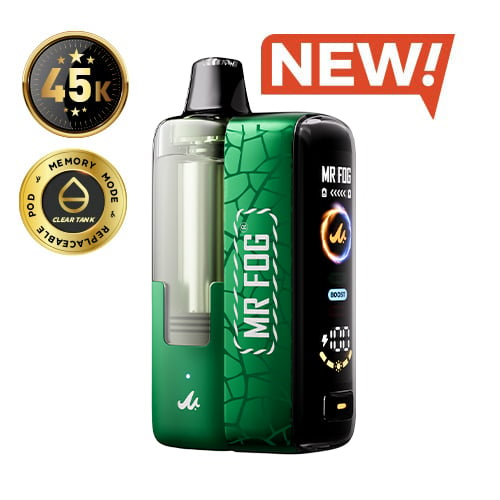 SWITCH POD MINT STEEZY
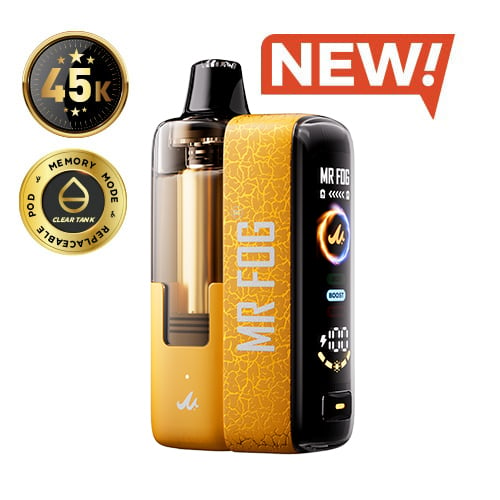 SWITCH POD PNCK
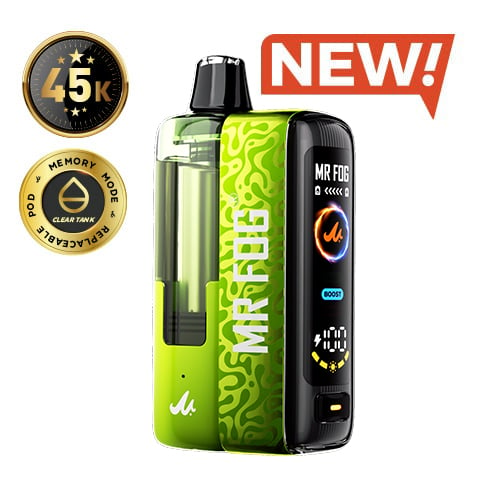 SWITCH POD SOUR
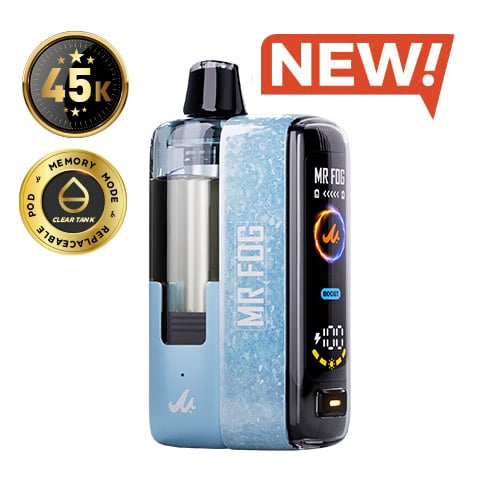 SWITCH POD SPLASH
 SWITCH POD
 AURA SPLASH
 AURA
AURA NOVA Apple Steezy
 NOVA Banana Steezy
 NOVA Popup Series
 NOVA Bubble Gang
 NOVA Lemon Steezy
 NOVA Series
 Blue Razz Steezy
 Mellow Man
 Apple Steezy
 Banana Steezy
 Berry Steezy
 DRT
DRT SWITCH POD
 Nicotine Pouches
As vaping continues to increase in popularity, institutions such as schools, hotels, workplaces, and public facilities are turning to technology to enforce no-vaping policies. One of the most commonly searched solutions is the vape detector.
- But what exactly is a vape detector?
- How does a vape detector work?
- Are they accurate?
- And can you install a vape detector at home?
This comprehensive guide answers all of those questions in detail.
What Is a Vape Detector?
A vape detector is an air quality monitoring device designed to detect aerosol particles and chemical compounds released from electronic cigarettes.
Unlike traditional smoke detectors that respond to combustion particles, vape detectors are built to identify:
-
Vaporized nicotine particles
-
Propylene glycol and vegetable glycerin
-
Volatile organic compounds (VOCs)
-
Fine aerosol particulate matter
These devices are commonly installed in enclosed areas where vaping is restricted.
How Does a Vape Detector Work?
This is one of the most searched questions:
How does a vape detector work?
Vape detectors rely on advanced environmental sensing technologies. Most modern devices use one or more of the following systems:
1. Laser Scattering Sensors
Laser-based detectors shine a small beam of light into the air. When aerosol particles pass through the beam, they scatter the light.
The device measures:
-
Particle density
-
Size of particles
-
Change in air clarity
If levels exceed preset thresholds, the vape detector alarm is triggered.
2. Gas Sensors
Gas sensors are designed to detect specific chemical signatures commonly found in vape aerosol, including:
-
Propylene glycol
-
Vegetable glycerin
-
Nicotine compounds
-
Certain VOCs
When chemical concentrations increase beyond normal background levels, the detector sends an alert.
3. Humidity and Air Pressure Monitoring
Vaping can temporarily alter:
-
Indoor humidity levels
-
Air pressure balance
-
Temperature micro-variations
Some multi-sensor devices use environmental changes as secondary confirmation to improve vape detector accuracy.
4. Multi-Sensor Technology
High-end devices combine:
-
Laser particle detection
-
Chemical gas sensors
-
Environmental sensors
This reduces false positives from:
-
Steam
-
Perfume
-
Cleaning chemicals
Multi-sensor devices are commonly used in schools and hotels.
What Does a Vape Detector Look Like?
Another frequent question is:
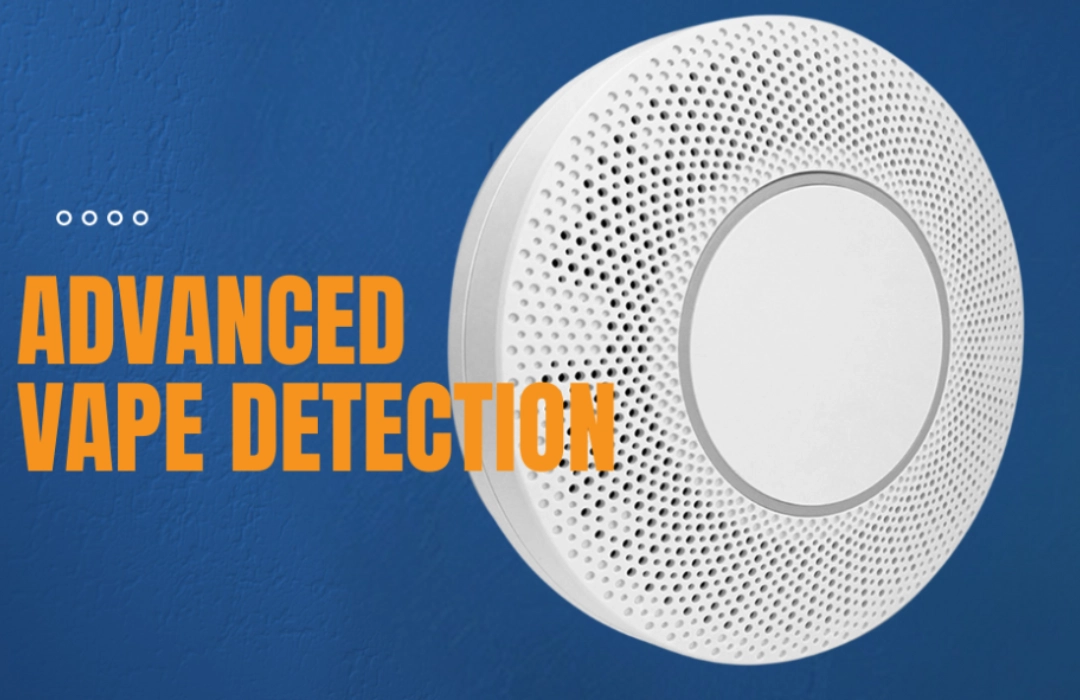
What does a vape detector look like?
Most vape detectors are small, discreet units that resemble:
-
Smoke detectors
-
Motion sensors
-
Compact white wall-mounted devices
They are typically:
-
Installed on ceilings or high walls
-
Designed to blend into existing infrastructure
-
Equipped with LED indicators
In bathrooms or school hallways, they often look similar to standard smoke alarms but without the loud siren typically associated with fire alarms.
How Vape Detector Alerts Work
When a vape detector identifies vapor or chemical signatures, it can:
-
Send real-time alerts via Wi-Fi
-
Notify administrators through cloud-based dashboards
-
Integrate with CCTV systems
-
Log time-stamped incidents
Some systems send push notifications through a vape detector app, allowing facility managers to monitor activity remotely.
Where Are Vape Detectors Commonly Used?
Bathroom Vape Detector Installations
Schools often install bathroom vape detectors because bathrooms are common areas for unauthorized vaping.
These units are designed to detect aerosol quickly in enclosed spaces.
Vape Detector in Hotels
Many hotels now install vape detectors in hotel rooms to enforce no-smoking and no-vaping policies.
If vapor is detected, the system can notify management before long-term odor or residue develops.
Vape Detector in Airports
Airports may use vape detection technology in:
-
Restrooms
-
Waiting areas
-
Restricted spaces
Given strict air quality regulations, airport vape detectors are typically part of integrated environmental monitoring systems.
Vape Detector in Airplanes
Commercial aircraft use sensitive smoke detection systems. While not all airplanes have dedicated vape detectors, modern aircraft smoke detection systems can often detect vapor aerosols in lavatories.
An airplane vape detector is typically integrated with fire detection systems rather than a standalone device.
Vape Detector for Apartments
Landlords sometimes install vape detectors in:
-
Rental apartments
-
Shared housing
-
Dormitories
These are often connected to building monitoring systems.
Vape Detector for Home Use
Some homeowners search for:
-
best vape detector for home
-
vape detector at home
-
affordable vape detector
Home-use devices exist, but they are less common than commercial systems. Most home units focus on:
-
Air quality monitoring
-
VOC detection
-
Smart home integration
They may not be as sensitive as school-grade systems.
Handheld Vape Detectors
A handheld vape detector is a portable device used by:
-
Security personnel
-
Facility inspectors
-
Compliance officers
These are typically used for targeted inspections rather than continuous monitoring.
Vape Detector Accuracy
How accurate is a vape detector?
Vape detector accuracy depends on:
-
Sensor quality
-
Installation location
-
Calibration frequency
-
Environmental factors
High-quality multi-sensor devices have significantly lower false alarm rates compared to early-generation models.
However, no system is perfect. Steam from showers or strong chemical cleaners may occasionally trigger alerts in lower-end models.
Vape Detector Alarm and Sound
Unlike traditional smoke alarms, many vape detectors:
-
Do not emit loud sirens
-
Send silent alerts to administrators
-
Trigger dashboard notifications
Some systems allow configurable vape detector alarm sounds, depending on facility policy.
Can You Buy a Vape Detector on Amazon?
Search terms like:
-
vape detector Amazon
-
amazon vape detector
-
affordable vape detector
reflect growing consumer interest.
While Amazon lists air quality monitors and VOC detectors, most commercial-grade vape detectors used in schools and hotels are purchased directly from specialized manufacturers.
Buyers should carefully review:
-
Sensor type
-
Certification standards
-
Connectivity options
-
Data logging capability
Are Vape Detectors Effective?
When properly installed and maintained, vape detectors are effective tools for:
-
Enforcing no-vaping policies
-
Monitoring indoor air quality
-
Reducing unauthorized vaping in restricted areas
Effectiveness increases when:
-
Devices are installed in enclosed spaces
-
Maintenance is performed regularly
-
Staff respond consistently to alerts
Final Thoughts
A vape detector is a specialized air monitoring device designed to identify vaporized substances in restricted environments. Using laser scattering sensors, gas detection technology, and environmental monitoring systems, these devices detect aerosol particles and send real-time alerts through connected systems.
From bathroom vape detectors in schools to vape detectors in hotels, airports, apartments, and homes, these devices are becoming increasingly common as vaping regulations evolve.
While not identical to smoke detectors, vape detectors represent an important technological response to modern air quality challenges.
 Elite Halloween
 ELITE
ELITE SWITCH POD MINT STEEZY
 SWITCH POD PNCK
 SWITCH POD SOUR
 SWITCH POD SPLASH
 SWITCH POD
 AURA SPLASH
 AURA
AURA NOVA Apple Steezy
 NOVA Banana Steezy
 NOVA Popup Series
 NOVA Bubble Gang
 NOVA Lemon Steezy
 NOVA Series
 Blue Razz Steezy
 Mellow Man
 Apple Steezy
 Banana Steezy
 Berry Steezy
 DRT
DRT SWITCH POD
 Nicotine Pouches