

 ELITE
ELITE SWITCH POD SPLASH
 SWITCH POD
 AURA SPLASH
 AURA
AURA NOVA Apple Steezy
 NOVA Banana Steezy
 NOVA Popup Series
 NOVA Bubble Gang
 NOVA Lemon Steezy
 NOVA Series
 Blue Razz Steezy
 Mellow Man
 Apple Steezy
 Banana Steezy
 Berry Steezy
 DRT
DRT SWITCH POD
 Nicotine Pouches
👉 How do vape detectors work?
Unlike traditional smoke detectors, vape detectors rely on advanced sensing technologies to identify microscopic particles and chemical signatures produced by electronic cigarettes. This guide explains how they function, where they are used, and how accurate they really are.
What Is a Vape Detector?
- Vape aerosol particles
- Chemical compounds (e.g., nicotine, propylene glycol)
- Changes in air composition
- Schools
- Bathrooms
- Hotels
- Offices
- Hospitals
- Public buildings
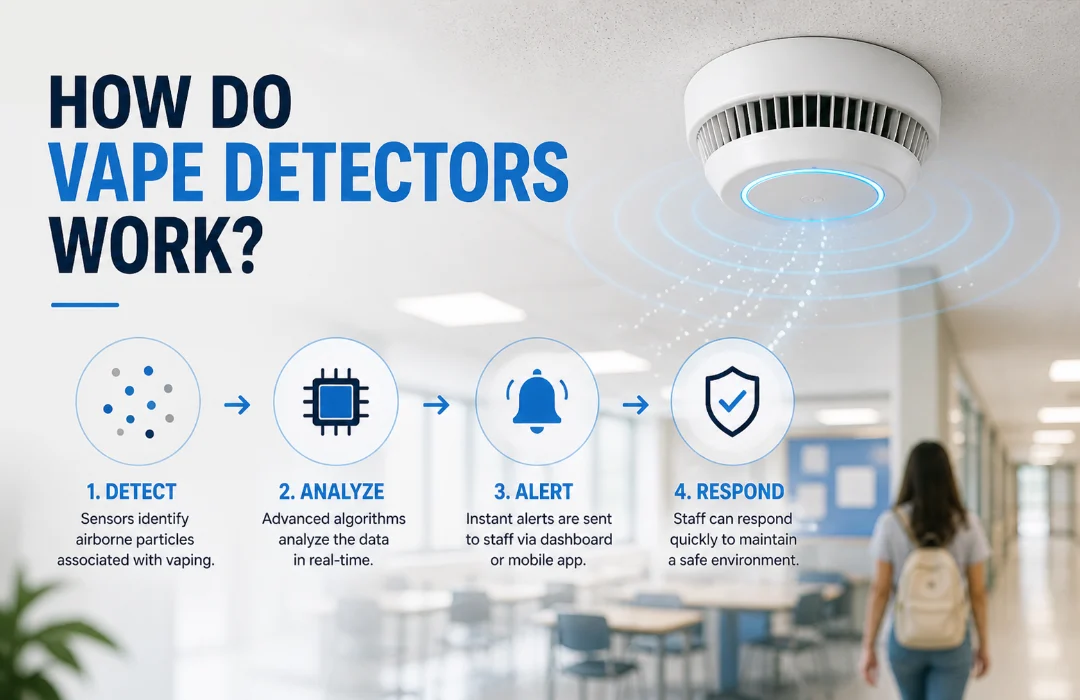
How Do Vape Detectors Work?
Multi-Sensor Detection Technology
Modern vape detectors use a combination of sensors rather than a single detection method.
1. Laser Particle Sensors
These sensors detect extremely small particles in the air.
- Vape aerosol particles are much smaller than smoke
- Often below 0.5 microns
- A laser beam detects how particles scatter light
👉 This is one of the most important technologies used in vape detectors.
2. Chemical Sensors
Vape detectors can identify specific substances such as:
- Nicotine
- Propylene glycol (PG)
- Vegetable glycerin (VG)
- THC-related compounds (in some models)
👉 These chemicals help distinguish vaping from normal air conditions.
3. Humidity and Temperature Sensors
Vaping causes:
- Sudden humidity spikes
- Localized air changes
These sensors help confirm whether aerosol is from vaping rather than:
- Steam
- Perfume
- Dust
4. Multi-Sensor Fusion
Most advanced systems combine all the above.
👉 This is why vape detectors for schools are highly effective and reliable.
What Do Vape Detectors Detect?
A common question is:
👉 what do vape detectors detect?
They are designed to identify:
- Fine aerosol particles
- Chemical compounds from e-liquid
- Changes in air density
- Humidity fluctuations
Unlike smoke alarms, they are built specifically for non-combustion detection.
Vape Detector vs Smoke Detector
Many people ask:
👉 can smoke detectors detect vape?
Key Difference:
| Feature | Vape Detector | Smoke Detector |
|---|---|---|
| Detects vape aerosol | ✅ Yes | ❌ Usually no |
| Detects fire smoke | ❌ No | ✅ Yes |
| Particle sensitivity | Extremely high | Moderate |
| Technology | Chemical + particle sensors | Optical / ionization |
👉 Smoke detectors are designed for fire safety, not vaping detection.
Do Vape Detectors Work?
👉 Yes — modern vape detectors are highly effective.
They can detect:
- Disposable vapes
- Pod systems
- Mods
- THC cartridges (in some cases)
However, effectiveness depends on:
- Placement
- Ventilation
- Sensor quality
Where Are Vape Detectors Used?
Schools
The most common use case.
👉 School vape detectors are installed in:
- Bathrooms
- Locker rooms
- Hallways
Hotels
👉 Vape detectors in hotels are used to enforce no-smoking policies.
Typical locations:
- Hotel rooms
- Hallways
Hospitals
Used to protect vulnerable patients and maintain clean air.
Offices & Public Spaces
Installed in:
- Offices
- Libraries
- Government buildings
- Transportation hubs
What Do Vape Detectors Look Like?
Many users also search:
👉 what does a vape detector look like?
Most devices resemble:
- Smoke detectors
- Carbon monoxide alarms
- Small wall-mounted sensors
They are usually:
- White
- Compact
- Installed on ceilings or high walls
How Sensitive Are Vape Detectors?
Modern detectors can identify extremely small particle concentrations.
👉 Some sensors detect as low as:
- 0.03 mg/m³ particle levels
Detection range:
- Typically 8–12 feet
- Can vary based on airflow and room size
Do Vape Detectors Work in Schools?
👉 Yes, very effectively.
Why schools use them:
- Enclosed spaces (bathrooms)
- High vaping risk areas
- Easy integration with security systems
Many systems also send alerts to:
- Staff phones
- Security dashboards
- Building systems
Do Metal Detectors Detect Vapes?
This is another common question:
👉 do vapes go off in metal detectors?
Answer:
Sometimes.
Metal detectors can detect:
- Batteries
- Metal components
But:
- Small devices may pass
- Detection depends on sensitivity
Can You Avoid Vape Detectors?
Many users search:
👉 how to avoid vape detectors
However:
- Modern detectors use multi-sensor technology
- They are difficult to bypass
- Tamper alerts are often built in
👉 In regulated environments, avoidance is not reliable.
Limitations of Vape Detectors
While advanced, they are not perfect.
Limitations include:
- Airflow can disperse aerosol
- Outdoor use is harder to detect
- High ventilation areas reduce sensitivity
For best results, systems are often combined with:
- Security cameras
- Policies
- Monitoring systems
Final Thoughts
So, how do vape detectors work?
👉 They use advanced sensors to detect:
- Aerosol particles
- Chemical compounds
- Air quality changes
👉 They are different from smoke detectors
👉 They are widely used in schools, hotels, and public spaces
👉 They are becoming essential for modern indoor monitoring
As vaping continues to grow, vape detection technology will only become more sophisticated and widely adopted.
 ELITE
ELITE SWITCH POD SPLASH
 SWITCH POD
 AURA SPLASH
 AURA
AURA NOVA Apple Steezy
 NOVA Banana Steezy
 NOVA Popup Series
 NOVA Bubble Gang
 NOVA Lemon Steezy
 NOVA Series
 Blue Razz Steezy
 Mellow Man
 Apple Steezy
 Banana Steezy
 Berry Steezy
 DRT
DRT SWITCH POD
 Nicotine Pouches