

 Elite Halloween
 ELITE
ELITE SWITCH POD MINT STEEZY
 SWITCH POD PNCK
 SWITCH POD SOUR
 SWITCH POD SPLASH
 SWITCH POD
 AURA SPLASH
 AURA
AURA NOVA Apple Steezy
 NOVA Banana Steezy
 NOVA Popup Series
 NOVA Bubble Gang
 NOVA Lemon Steezy
 NOVA Series
 Blue Razz Steezy
 Mellow Man
 Apple Steezy
 Banana Steezy
 Berry Steezy
 DRT
DRT SWITCH POD
 Nicotine Pouches
As vaping becomes more common, especially in schools, workplaces, and public buildings, many facilities are installing vape detection systems to monitor indoor air quality and enforce no-vaping policies.
This leads to a common question:
👉 What do vape detectors look like?
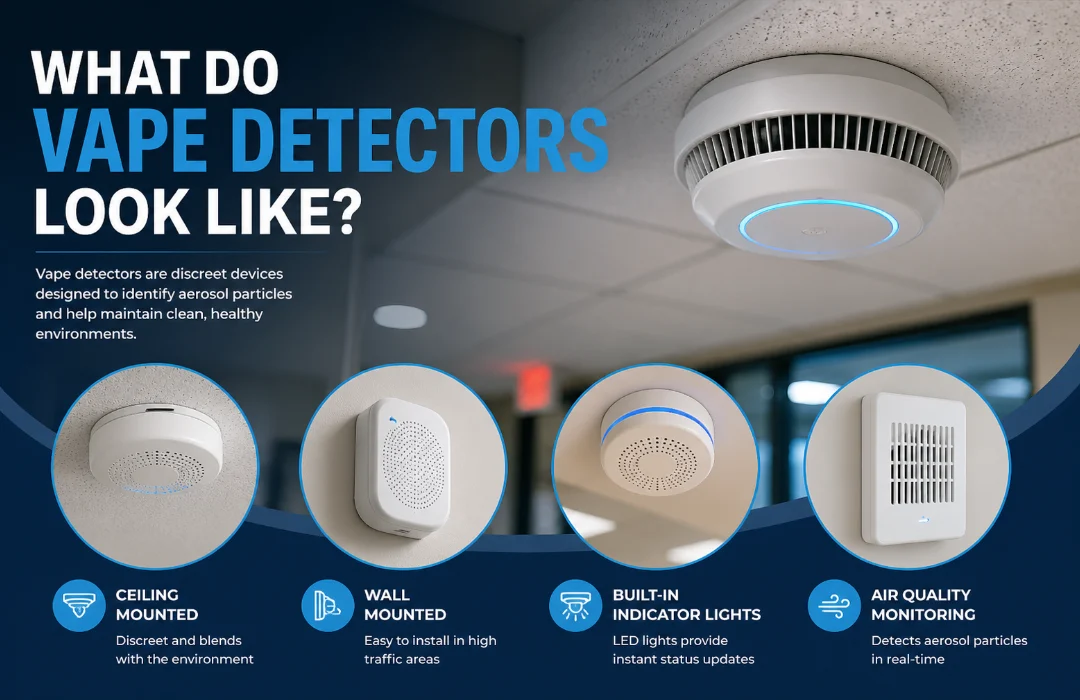
At first glance, vape detectors are not always easy to identify. Many are designed to blend into their surroundings, making them look similar to other safety or monitoring devices.
This guide explains how vape detectors look, where they are placed, and how to recognize them in real-world environments.
What Does a Vape Detector Look Like?
Most vape detectors are designed to be:
- Compact
- Discreet
- Mounted on ceilings or walls
In many cases, they resemble:
- Smoke detectors
- Carbon monoxide alarms
- Motion sensors
- Small security devices
👉 This design allows them to monitor spaces without drawing too much attention.
Typical Physical Appearance
While designs vary by brand, most vape detectors share these characteristics:
Size
- Small and compact
- Usually 3–6 inches in diameter (ceiling models)
Shape
- Round (like smoke detectors)
- Square or rectangular (wall units)
Color
- White or neutral tones
- Designed to match ceilings or walls
Common Types of Vape Detector Designs
1. Ceiling-Mounted Vape Detectors
These are the most common type.
👉 They look almost identical to smoke alarms.
Key Features:
- Installed on ceilings
- Wide detection coverage
- Often used in:
- School bathrooms
- Hallways
- classrooms
👉 If you’re wondering about vape detectors in school bathrooms, this is usually what you’ll see.
2. Wall-Mounted Vape Detectors
Wall-mounted units are slightly more visible.
They often look like:
- Small speaker boxes
- Security sensors
- Air quality monitors
Common locations:
- Classrooms
- Offices
- Hotel rooms
👉 These are often used where ceiling installation is not ideal.
3. Portable or Standalone Vape Detectors
Some devices are not permanently installed.
Appearance:
- Small electronic devices
- Similar to air purifiers or monitoring units
Used in:
- Temporary setups
- Private offices
- Testing environments
How to Identify a Vape Detector in a Room
If you’re trying to figure out whether a vape detector is present, look for these clues:
Placement
Most vape detectors are installed in areas where vaping is likely to occur:
- Bathrooms
- Locker rooms
- Hallways
- Hotel rooms
- Offices
LED Indicators
Many vape detectors include:
- Small LED lights
- Flashing or color-changing indicators
👉 These lights may activate when detecting activity or during normal operation.
Labels or Branding
Some devices may include:
- Brand names
- “Air quality monitor” labels
- Small printed identifiers
Others are completely generic.
Connectivity Features
Advanced vape detectors may have:
- Wi-Fi modules
- Small vents or sensors
- Hidden antenna components
These allow them to send alerts to administrators or security systems.
Do Vape Detectors Look Like Smoke Detectors?
👉 Yes — in many cases, they do
This is why many people confuse the two.
However, there are key differences:
| Feature | Vape Detector | Smoke Detector |
|---|---|---|
| Purpose | Detect vape aerosol | Detect fire smoke |
| Sensitivity | Very high (small particles) | Designed for smoke |
| Appearance | Similar | Similar |
| Alerts | Silent or system-based | Loud alarm |
👉 Even though they look similar, they use very different technology.
Where Are Vape Detectors Commonly Installed?
Schools
- Bathrooms
- Hallways
- Locker rooms
👉 This is where school vape detectors are most common.
Hotels
Hotels may install vape detectors to enforce no-smoking policies.
👉 Common locations:
- Guest rooms
- Hallways
Offices and Commercial Buildings
- Workspaces
- Meeting rooms
- Shared areas
Public Spaces
- Libraries
- Government buildings
- Transportation hubs
Are Vape Detectors Hidden?
👉 Not completely—but often discreet
Most vape detectors are:
- Visible if you look for them
- Designed to blend in
- Positioned for maximum coverage
Some environments may choose more visible models to act as a deterrent.
Common Misconceptions
“Vape detectors have cameras”
❌ False
They do not record video or audio
They only detect air composition
“They are easy to spot”
❌ Not always
Many look like standard safety devices
“They are the same as smoke detectors”
❌ Incorrect
They use different sensors and detection methods
Do Vape Detectors Really Work?
👉 Yes — modern vape detectors are highly effective
They can detect:
- Vape aerosol particles
- Chemical compounds
- Air quality changes
Accuracy depends on:
- Sensor quality
- Placement
- Calibration
Final Thoughts
So, what do vape detectors look like?
👉 Most look like smoke detectors or small air sensors
👉 They are usually installed on ceilings or walls
👉 They are designed to be discreet but effective
As vaping detection technology continues to evolve, these devices are becoming more common in schools, hotels, and public spaces.
Understanding what they look like helps you recognize their presence and purpose in modern indoor environments.
 Elite Halloween
 ELITE
ELITE SWITCH POD MINT STEEZY
 SWITCH POD PNCK
 SWITCH POD SOUR
 SWITCH POD SPLASH
 SWITCH POD
 AURA SPLASH
 AURA
AURA NOVA Apple Steezy
 NOVA Banana Steezy
 NOVA Popup Series
 NOVA Bubble Gang
 NOVA Lemon Steezy
 NOVA Series
 Blue Razz Steezy
 Mellow Man
 Apple Steezy
 Banana Steezy
 Berry Steezy
 DRT
DRT SWITCH POD
 Nicotine Pouches